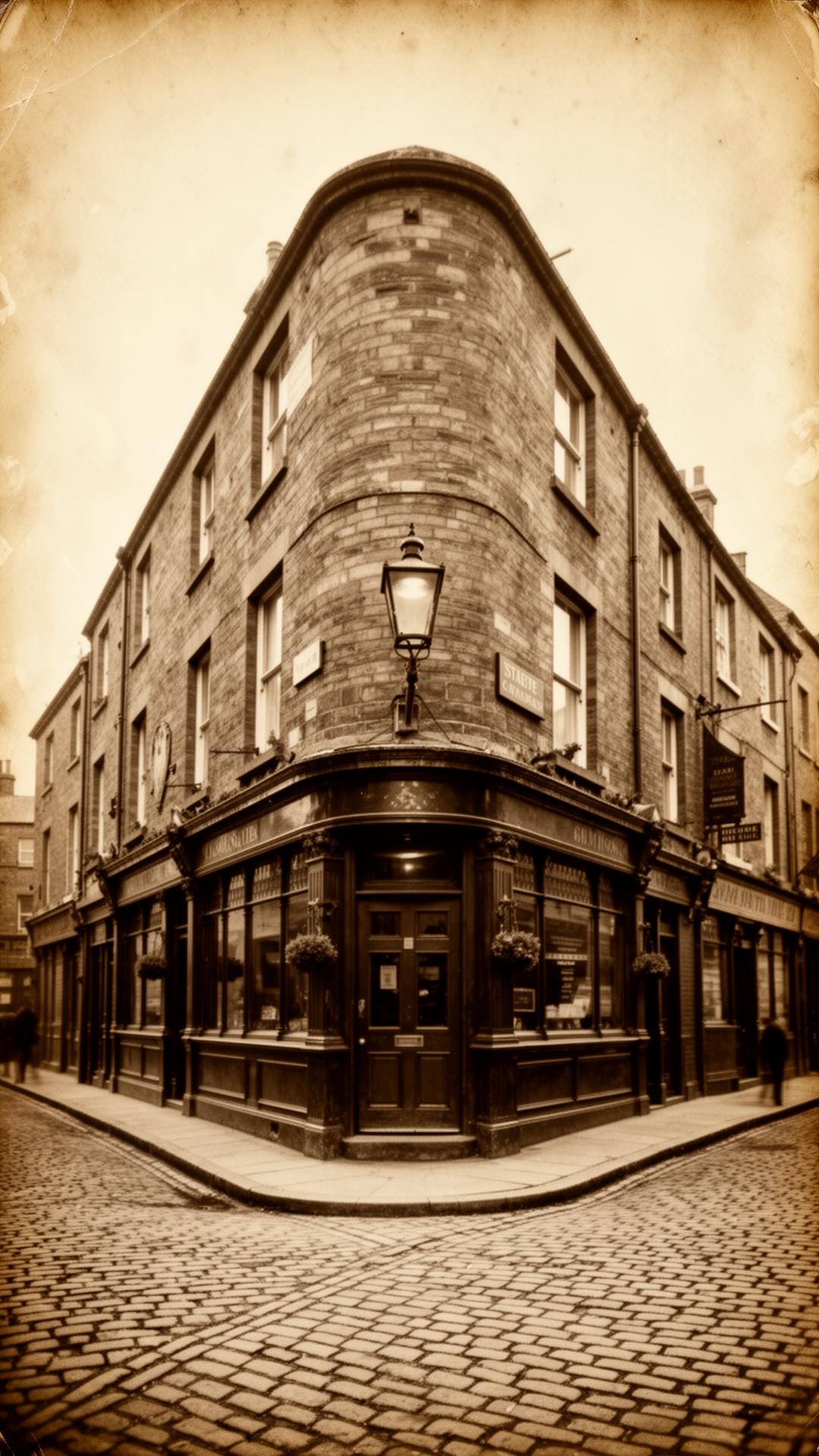
Chapter one
Stories in the walls.
A pub, properly understood, isn't a building. It is the accumulation of every conversation that ever happened inside it.
— from a regular, scribbled on a beer mat, 2019
c. 1840s
The lintel is hung.
The Hour Glass appears in Exeter trade directories for the first time. The building — already odd, already wedge-shaped — is licensed as a public house serving the labourers, quay-men and dockers who keep the river economy running. Beer arrives by cart from a brewery on Commercial Road. The bar is plain pine. Nobody yet calls it 'historic'.
1880s
Gas lamps and gossip.
The pub takes on the look it would keep for a century: dark panelling, etched glass, brass fittings and a long mahogany counter polished by elbows. Local newspapers occasionally report on goings-on at The Hour Glass, mostly mild scandals involving sailors and the wrong sort of song after eleven o'clock.
1940s
The war years.
Exeter is heavily bombed in the Blitz of May 1942. The Hour Glass, against statistical odds, survives. Locals will later swear the building is too oddly shaped to hit. Servicemen on leave drink here on their way to and from the train station. Some of their signatures, in pencil, are still visible behind the dartboard.
1970s
Quiet stubbornness.
While much of the city centre is reshaped, The Hour Glass refuses to modernise. The same brewery deliveries. The same regulars. The same chairs, mended rather than replaced. A landlord of the era is quoted in the Express & Echo: 'We don't change it because it isn't broken.'
2000s
An independent future.
The pub passes into independent hands and stays that way — fiercely. Real ale from Exeter Brewery and Otter become permanent fixtures. A small kitchen is added at the back; Sunday roasts begin and never really stop.
Today
Almost stubbornly itself.
We light the candles at four. We open the back snug for the folk session on the last Sunday of the month. We try, mostly, not to ruin a good thing.
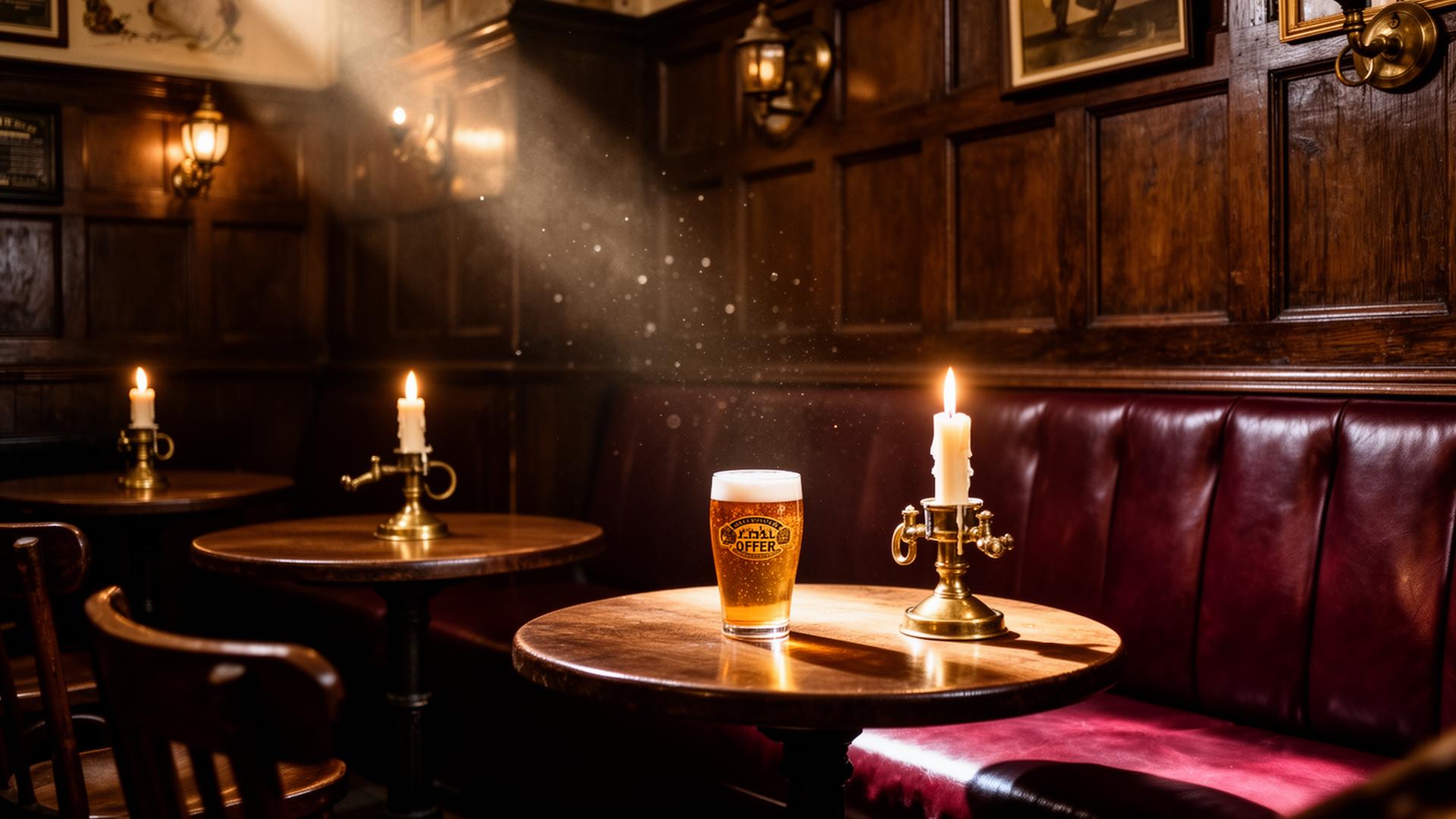
Heritage
Exeter, the Quay, and the pub on the corner.
Exeter has been a port city since the Romans rerouted the river. The Quay, just down the hill, was once where wool from Devon farms left for the continent. Pubs like The Hour Glass were the city's living rooms — small, lamp-lit, and central to a working day. The Quay is now a place for slow walks and Sunday cyclists, but the pub at the top of the hill is still doing what it always did.
Come and find us